Real Video vs AI Video Which Drives Better Engagement and Marketing Results

A video can make someone feel like they were in the room, or it can explain a product in 30 seconds at a fraction of the cost. Those are very different strengths, and brands now have access to both.
Real video content, filmed with actual people, locations, voices, and moments, has long been the standard for building trust. AI-generated video, built from prompts, scripts, avatars, synthetic voices, or generated visuals, is quickly becoming a practical tool for speed and scale.
The question is no longer whether one will replace the other. The better question is which type of video works best for a specific goal. Real video tends to win when emotion, credibility, and story matter most. AI video tends to win when speed, volume, testing, and personalization matter most. Strong marketing strategies increasingly use both.
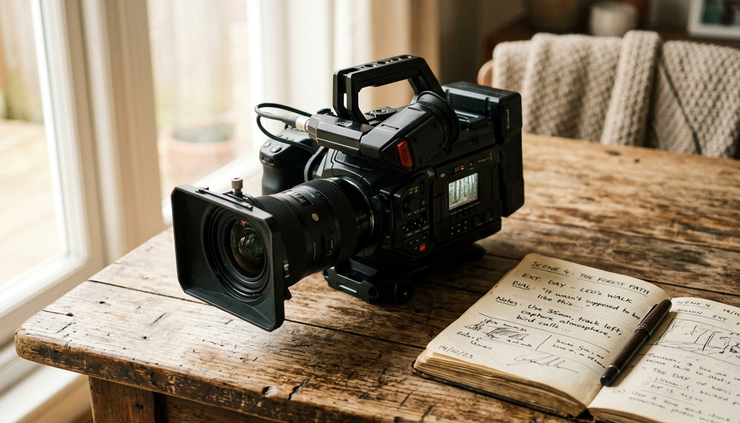
Real video creates trust through visible human presence
Real video carries signals that audiences understand without thinking much about them. A nervous laugh, a pause before an answer, the way someone gestures while telling a story, the noise of a real kitchen or workshop in the background, all of these details help people decide whether something feels true.
This matters because engagement is not only about views. A video can get a high view count and still fail to create belief. Authentic video gives audiences more evidence to read. They can see the person, the setting, the body language, and the stakes of the moment.
Examples of real video content include:
A customer testimonial filmed in the customer’s own space
A founder explaining why a product was created
A behind-the-scenes clip from a farm, studio, factory, kitchen, or event
A product demonstration with unedited or lightly edited use
A short documentary-style brand story
These formats work because they answer a quiet question in the viewer’s mind: “Is this real enough for me to care?”
A local bakery showing a baker shaping dough at 4 a.m. can say more about craft than a polished slogan. A fitness instructor correcting a client’s form in a real session can show expertise better than a scripted claim. A nonprofit filming a volunteer speaking from the field can create emotional weight that stock-like visuals rarely match.
That emotional texture is hard to fake well. Even when AI video looks clean, viewers may still sense that something is missing if the goal is intimacy, vulnerability, or proof.
AI video wins on efficiency, scale, and variation
AI-generated video has a different advantage. It reduces the time, cost, and coordination that traditional production often requires. There is no crew to schedule, no location to secure, no weather to monitor, and no reshoot if a line changes. A team can turn a script into a usable explainer, product walkthrough, training clip, or short-form test concept quickly.
AI video can include:
A synthetic presenter explaining a feature
A generated product scene based on a written prompt
A text-to-video animation for an educational topic
A localized version of the same message in several languages
A short social clip with multiple openings for testing
This makes AI useful for high-volume needs. For example, a software company may need dozens of tutorial videos for minor feature updates. Filming each one with a presenter may take too long. An AI avatar or generated screen-led explainer can help the team publish faster.
An ecommerce brand may want to test five different angles for a seasonal product: convenience, price, design, gifting, and sustainability. AI video can produce rough creative versions that help the team learn which message earns attention before investing in a bigger shoot.
The core value is not just lower cost. It is creative flexibility. AI video makes it easier to revise, resize, translate, repurpose, and produce at a pace that real production cannot always match.

Engagement depends on what the audience needs from the video
Engagement is often measured with visible metrics: views, watch time, likes, comments, shares, click-through rates, and conversions. Those metrics matter, but they do not all mean the same thing.
A short AI-generated explainer might earn strong completion rates because it is clear and concise. A real customer story might earn fewer views but create higher-quality leads because the people who watch it trust the message more.
The best format depends on the job the video has to do.
Goal | Real video advantage | AI video advantage |
Build trust | Shows real people, places, and proof | Can summarize trust points, but may feel less personal |
Explain a simple idea | Works well with a strong presenter | Fast to create and easy to revise |
Tell a brand story | Strong emotional pull and memory | Useful for supporting visuals, not usually the core |
Test message angles | Slower and more expensive to produce | Easy to create many versions |
Localize content | Requires more production planning | Can adapt language and format quickly |
Show product use | Best for tactile, physical proof | Useful for concept visuals or early tests |
Train or onboard | Good for culture and human examples | Strong for repeatable lessons at scale |
For high-stakes decisions, people often want proof. That is where real video has a clear edge. A patient talking about care, a homeowner discussing a renovation, or a customer showing how a tool fits into daily work can create a level of trust that synthetic content struggles to match.
For low-stakes learning, AI video can be more than enough. A viewer who needs to know how to reset a password, compare plan features, or understand a process may value clarity over emotional depth.
This is why Real Video vs AI Video Which Drives Better Engagement and Marketing Results has no single answer for every campaign. The answer changes based on the audience’s level of trust, the complexity of the offer, and the action being requested.
Authentic storytelling still has a durable edge
Storytelling is where real video remains strongest. A good story has tension, change, specificity, and emotional payoff. Real people bring those elements naturally when they speak from lived experience.
Take a customer success story. A scripted AI presenter can say, “This product helped the customer save time.” That may be clear, but it is generic. A real customer can say, “Before this, I was staying late every Thursday to finish reports. Now I leave on time.” That detail gives the audience something to picture.
Specifics make stories believable.
Real video also captures moments that were not planned:
A founder getting emotional while describing an early failure
A chef laughing after a dish does not plate perfectly
A technician pointing out a detail only an expert would notice
A customer hesitating before sharing the real problem they faced
These moments often become the most memorable part of the video. They show stakes. They turn a claim into a scene.
AI-generated video can support storytelling, especially with animation, visualization, and quick scene building. It can show an abstract process, create a simple metaphor, or help a small team produce a storyboard before filming. But when a brand needs the audience to believe a human experience, real video usually carries more weight.
That does not mean real video should be raw by default. Authentic does not mean careless. Good lighting, clear audio, thoughtful editing, and a sharp story arc still matter. The strongest real videos feel honest and intentional at the same time.

AI video changes the economics of content strategy
AI video matters because it changes what teams can afford to make. A small organization may not have the budget for constant filming, editing, and reshoots. AI tools give that team a way to keep publishing useful video content without treating every clip like a major production.
This can shape strategy in several ways.
Teams can test before they invest
Before filming a full campaign, a team can create AI-generated concept videos to test hooks, scripts, and visual ideas. If one angle performs better, the team can then make a real video with greater confidence.
For example, a home services company might test three short AI-assisted explainers:
One focused on preventing expensive repairs
One focused on comfort and safety
One focused on seasonal maintenance
If the safety message earns stronger engagement, the company can film real technicians and customers around that theme later.
Brands can create more educational content
Educational videos often need clarity more than cinematic quality. AI video can help create quick lessons, product walkthroughs, glossary explainers, and onboarding content.
This is useful for industries where buyers need education before they feel ready to act. A financial software company, a health and wellness brand, or a home improvement service can answer common questions in video form without waiting for a full shoot.
The caution is that sensitive topics still need human review. AI can present information clearly, but accuracy, context, and tone need careful oversight.
Content can be adapted for different audiences
AI video can make it easier to adapt the same core message for different markets, languages, or knowledge levels. A brand can create a beginner version, an advanced version, and a short recap without starting over each time.
This is especially useful for internal training, customer support, and product education. It also helps when a brand serves a nationwide audience with different needs across regions.
The risk is sameness. If every video has the same synthetic voice, pacing, and visual style, audiences may tune out. Scale helps only when the content still feels useful.
The risks of AI video are real
AI-generated video can save time, but it also introduces risks that marketers need to manage.
The first risk is trust. If viewers feel misled, the content can damage credibility. A synthetic customer testimonial, for example, would be a serious mistake if it implies a real person had a real experience. AI should not be used to fake proof.
The second risk is blandness. AI tools often produce polished but generic output unless the team gives them strong direction. A video may look complete while saying nothing memorable.
The third risk is accuracy. AI-generated scripts, captions, or visuals can include mistakes. Any video that explains a product, policy, process, or claim needs human review before publication.
The fourth risk is disclosure. Brands should be clear when synthetic presenters, artificial voices, or generated scenes could affect how the audience interprets the message. Disclosure does not have to be awkward. A simple note such as “created with an AI presenter for training purposes” can preserve trust.
That trust matters more than novelty. Audiences may accept AI video for explainers, training, or quick updates. They are less likely to accept it when the video pretends to show real experience, real endorsement, or real evidence.
A hybrid strategy often works best
The strongest video strategies do not treat real video and AI video as enemies. They assign each format to the role it performs best.
Use real video when the content needs:
Human emotion
Customer proof
Founder or expert credibility
Product texture and physical detail
Event energy
A story with personal stakes
Use AI video when the content needs:
Fast production
Many versions
Script testing
Training at scale
Localization
Simple explainers
Early creative concepts
A strong campaign might start with AI-generated storyboards and test clips, then move into real video production once the message is proven. After filming, AI tools can help create shorter cuts, captions, translations, and variations for different channels.
For instance, a brand launching a new outdoor product could film real users testing it on a trail. That becomes the emotional centerpiece. Then AI-assisted edits can turn the footage into product explainers, quick how-to clips, and localized versions. Real footage provides the trust. AI helps extend the value of the investment.
The reverse can work too. A company may begin with AI explainers to educate the market. Once the audience understands the category, the company can add real customer stories to build confidence and drive conversions.

How to choose the right format for a marketing goal
The choice becomes clearer when it starts with the outcome. Before producing a video, define what the viewer should think, feel, or do after watching.
If the goal is awareness, both formats can work. AI video can create volume and test ideas. Real video can create a stronger first impression when the story is distinctive.
If the goal is trust, real video usually deserves priority. Customer testimonials, expert interviews, founder stories, and behind-the-scenes footage help reduce doubt.
If the goal is education, AI video can be highly effective. Short lessons, product walkthroughs, and process explainers benefit from speed and clarity.
If the goal is conversion, the best choice depends on the offer. A simple, low-risk purchase may perform well with an AI-generated explainer. A high-consideration purchase often needs real proof, such as demos, case stories, or expert-led video.
A practical test is to ask three questions:
Does the viewer need to believe a real person?
If yes, use real video.
Does the message need many versions quickly?
If yes, AI video can help.
Would synthetic content weaken the claim?
If yes, keep the core content real and use AI only for support.
The best engagement comes from matching format to trust
Real video and AI-generated video drive different kinds of engagement. Real video wins when the audience needs connection, proof, and emotional depth. AI video wins when the team needs speed, scale, and flexible production.
The smartest marketing strategies use real video as the trust engine and AI video as the production multiplier. Real people, real places, and real stories give a brand emotional weight. AI helps turn ideas into more formats, more tests, and more useful content.
The better choice is not the newest tool or the most traditional method. It is the format that matches the promise being made. When the video needs to feel lived, film real life. When the message needs to move fast and adapt, use AI with care.
Comments